
You’ve spent the last two weeks glued to the Winter Olympics and now, those of you who are in the medical field wonder how you can become a volunteer doctor (or other medical professional) on the US Olympic Team. The bottom line is, it’s about as rigorous and selective as medical school and residency. And the process starts years before you actually get to go to the Olympics. But by all accounts, the experience is terrific!
Since I’m a doctor, I’ll restrict my discussion to physicians, however, the process is similar for other health care professionals.
The official U.S. Olympic and Paralympics Committee’s (USOPC) Sports Medicine Division is the group tasked with recruiting and training the team of 150 volunteer doctors and many others (chiropractors, nurses, physical therapist, etc.). They have to put a team together every two years (Winter and Summer Games). First, there is the application. Applicants must be licensed, have at least three years of experience, no felonies, sanctions, or disciplinary actions. Doctors must have a current DEA number, at least $1 million in malpractice insurance, have current CPR certification and know how to use a defibrillator. Also, doctors must have an additional Certification in Sports Medicine, which for many people means an extra 12 months of coursework before they can even apply.
After you pass this initial step, it’s off to one of the US Olympic Training Centers (Chula Vista, CA, Colorado Springs, CO, or Lake Placid, NY). These facilities already have full-time medical staff, cutting-edge equipment, and robust multidisciplinary care for elite athletes. Volunteer doctors go here for more training, interviews, and to help care for Olympic athletes in training. This is sort of like another internship, where doctor applicants get to know the Olympic system, and the Olympic medical staff get to know the volunteer doctor applicants. Your room and board will be paid for; the rest is your penny. If you make the cut there, you’re added to the pool of doctors eligible to be considered for the next step.
As a doctor applicant, you’ll begin to receive notices of competitions to sign up for, national events like Olympic qualifiers or international events like the Pan Am Games. All sports are included, skiing, track, curling, ice skating, badminton, swimming, you name it. The plan is to go serve during these “tryout” events, so coaches and athletes can get to know you. When you get an assignment, you will travel (at your own expense) with a US team to the location. At these events, expect to do it all; help set up equipment, treat injured athletes and coaches (and guests), take 24-hour call for emergencies. You’ll also help with sports medicine clinic, do stretching, apply tape or braces, go to all team practices, help with equipment and paperwork, even cleaning and laundry. A true internship (We all remember scut work.)! You are not paid for this work at all. You won’t be surprised to know that doctors race to sign up for these events as soon as they are announced, because they are first come, first served. And the more events you go to, the better chance you have of being chosen for the final team.
Along the way, as you go to many events, athletes and coaches can give feedback on your performance, your interactions, your personality. At any point, you could get a “thanks, but we don’t need you anymore” letter, from the USOC, with no explanation. Or athletes and coaches could say they really like working with you, and you could remain in the running.
This process can take years. There are doctors who went through this and spent five or ten years before they made it onto the US Olympic Team. The USOP narrows the list of doctors down (Their decision-making process is not public, so we don’t know their criteria.). If you are chosen, you’ll be notified about a year in advance of the Olympic you are assigned to.
This multi-year application process is a huge commitment, both in time away from work (while you’re going to all those national events) and money (lost earnings while you’re gone, travel expenses, etc.).
What happens once you’re accepted to be a volunteer Olympic doctor? Expect to pay for your flight to the Olympic host city, and your accommodations. Don’t expect to get paid for the work you do, but you may have meals covered while you’re working. Although your particular set of skills (!) are taken into account, you won’t choose your favorite sport; expect to work wherever you are assigned.
What kind of care will you give? You’ll be busy! Anything goes! You should expect to see lots of orthopedic injuries, like bruises, strains and sprains, fractures, and dislocations. Expect concussions. Be on the lookout for Norovirus and Influenza. You may also encounter some illnesses specific to the Winter Olympics, like “sled head”, (headaches, fogginess, and a sensation of being off-balance, from the bobsled/luge track being bumpy or from doing many track runs) or skier’s thumb (a ligament injury at the base of the thumb, cause by falling on an outstretched hand while holding a ski pole). So far, in the Milan Winter Olympics, Lindsey Vonn had a complex tib/fib fracture. Speed skater Kamila Sellier had a facial laceration from a skate blade during a crash on the ice track. Italian giant slalom skier Giada D’Antonio ruptured an ACL. Swiss hockey player Kevin Fiala fractured his lower leg. Plenty of people had Norovirus.
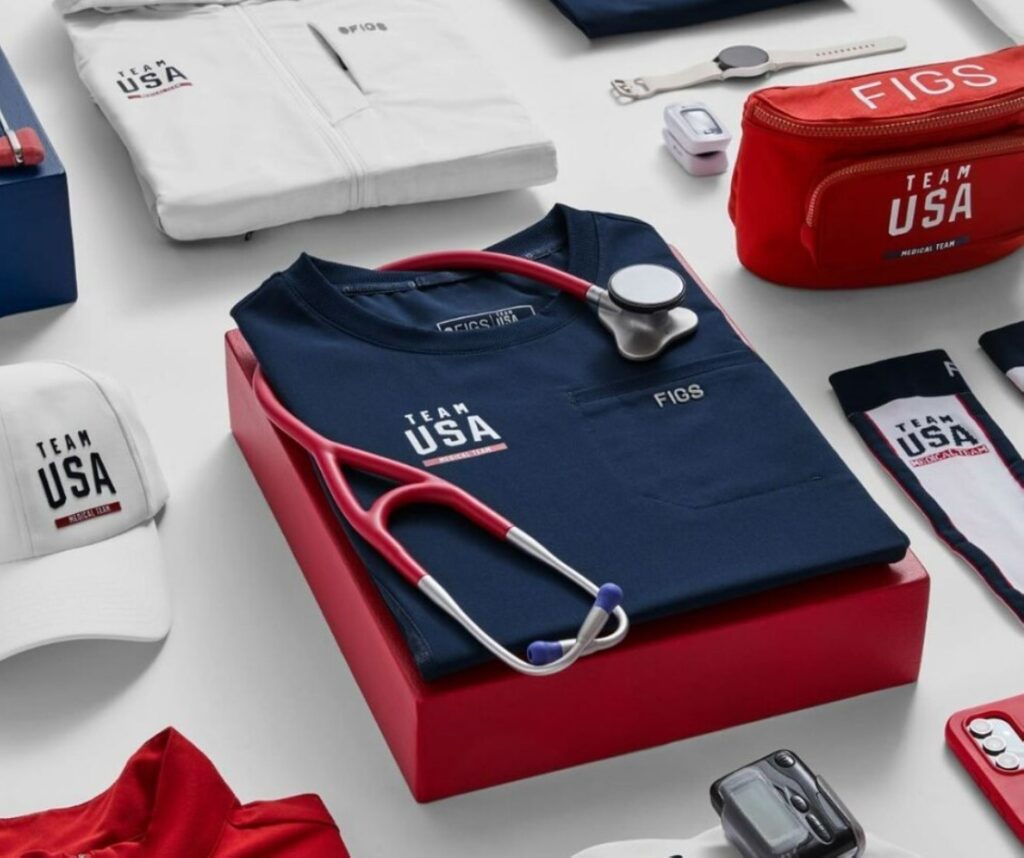
What do you get? You’ll get cool official uniforms and gear to keep. You will learn and practice new skills. You’ll meet people from all over the world. You’ll be front and center at a once-in-a -lifetime event, with a unique behind-the-scenes glimpse of what most people only see on television. You’ll gain the privilege and prestige of working with elite athletes.
Dr. Arin Saha, a surgeon who volunteered at the 2012 London Olympics, termed his service “unforgettable.” “I found the experience of volunteering fantastic and would have been one that I would happily have paid for,” he said.
Dr. Mark Hutchinson, professor of orthopedics and sports medicine at University of Illinois Chicago, has spent over 30 years volunteering at Olympic and Paralympic Games. As a child, he dreamed of being an Olympic athlete. Now he says, “I knew I wasn’t going to make it there as an athlete… But I thought that as a doctor, I could go and enjoy Olympic glory vicariously.” He volunteered in 1996 Atlanta (rhythmic gymnastics), 2016 Rio (equestrian), 2020 Tokyo (Covid cross coverage), 2022 Beijing (head team physician in the Olympic Village, overseeing speed skating, figure skating, curling, and snowboarding), and more. His advice is “Leave your ego at home and focus entirely on the athletes’ success.” He is known for his workhorse mentality, finding extra work to do when possible. In Tokyo, when some staff were quarantined due to Covid, he and his medical team chopped vegetables in the athlete cafeteria.
Dr. Mark Schultzel, a San Diego orthopedic surgeon specializing in the shoulder and elbow, has been a physician volunteer at several Olympics, “The gold medal’s in here,” he says, pointing to his heart. “It is an honor to be able to volunteer for this, and so, I feel like a winner just by being there.”
How about you? Ready to start filling out that application? You could be ready in time for the 2030 Winter Olympics in the French Alps, or the 2032 Summer Games in Brisbane, Australia! Get started now!
Count me in! Where do I get that ap? 😊