
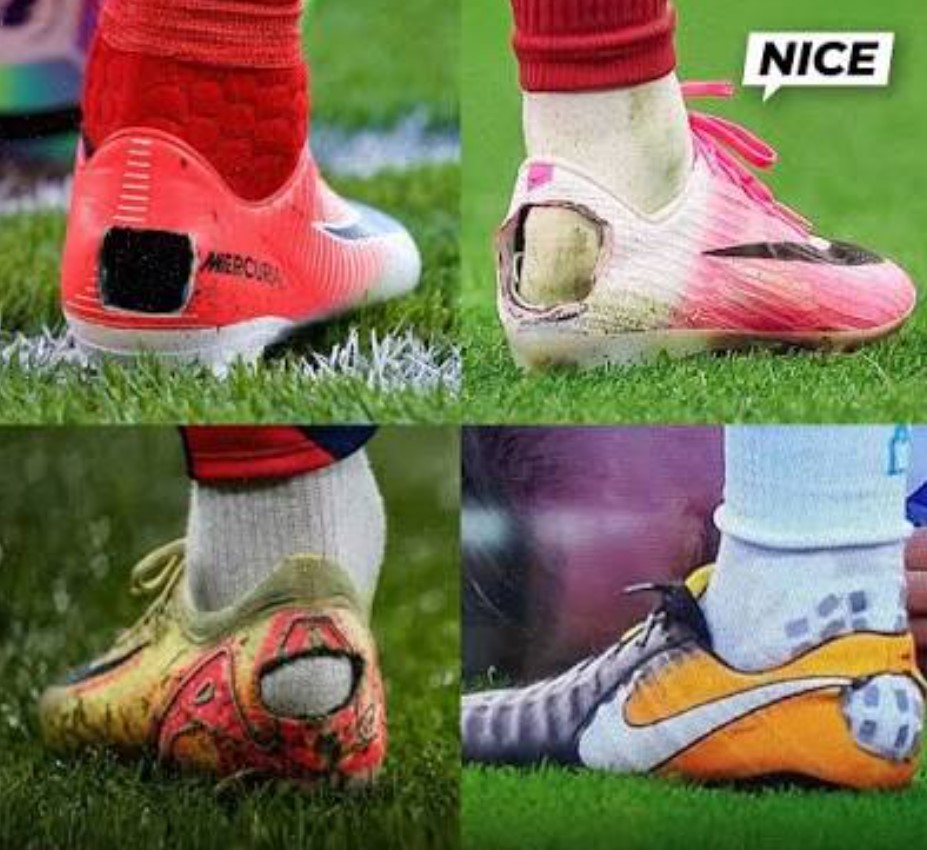
Have you, like much of the United States and the world, been riveted to FIFA soccer this summer? In a country where football, baseball and basketball reign supreme, it looks like we are finally catching up to the rest of the world, doesn’t it? I live in Atlanta, and our family was lucky enough to go to the Haiti vs Morocco match. It was exciting and high scoring, with the happiest, most enthusiastic fans I have ever encountered. What an experience!
I’m a doctor, so I couldn’t help but flinch each time a player fell to the grass, injured (or acting like he was). As I write this, Spain and France are playing in the semis, and Saliba of France is out with a hamstring injury in the first 30 minutes of the match. In my typical nerdy fashion, I began to wonder about soccer injuries.
(OK, we should bypass the whole issue of “flopping”, which is falling down and acting like you’re hurt. I do have some friends who believe all professional soccer players were once kids who went to theatre camp and developed their acting chops early. But that is another story…..)
Combining practice hours and playing hours, men professional soccer players have about 6 injuries per 1000 contact hours. Women professional soccer players have fewer; about 2 injuries/1000 hours. This is waaaay less than the 40 injuries/1000 hours seen in American football and ice hockey (and football and hockey injuries are typically more serious). Of course, the trauma is predominantly lower extremity (hip, ankle, foot) problems, with knee injuries (like ACL/MCL tears) and sprained ankles leading the pack. Hamstring strains, groin pulls and shin splints are common. There are, however, a few injuries that are pretty specific to soccer.
First of all, have you been wondering why those well-paid professional soccer players sometimes cut holes in the back of their fancy new soccer shoes? Me too! Turns out, they are protecting a sore spot. Athletes who wear stiff shoes sometimes get a bony enlargement on the back of the heel from the persistent wear of the shoe against the bone. Then the soft tissue overlying that bone enlarges, creating a bump. As the bump enlarges, the spot where the Achilles tendon attaches to the heel gets tender. The whole area can get red and inflamed. Those soccer players with holes in their shoes are trying to avoid or treat that. This malady, called Haglund’s bump, was first described by Patrick Haglund, a Swedish orthopedic surgeon, in 1927. The medical term is retrocalcaneal exostosis, but it’s most commonly called “pump bump” because women who wear high heels often develop the bump. Surgery to remove the bump is followed by slow recovery, so many players just cut out the back of their soccer cleats. Now you know! And many thanks to my friend Ken Roberts, who clued me in to Haglund’s bump.
Jumpers knee, also called patellar tendonitis, is common in soccer, volleyball and basketball players, and other athletes who jump, run, and change direction a lot. With lots of jumping, small microtears develop in the patellar tendon (the tendon connecting the kneecap with the shinbone), creating pain in the lower part of the kneecap. Pain develops insidiously over time and can be difficult to treat. It’s common, affecting around 14% of athletes. Unfortunately, more than half of athletes with this problem end their career because of it. Have you ever had shin splints? It’s similar but a little bit higher in the tendon.
Turf toe is a sprain of the great, or big toe. It typically happens when someone is already prone on the ground with their knee and toes touching the turf. Someone falls on them, and their toe gets hyperextended (flexed upward). It’s more common on artificial turf than grass, and for that reason many athletes prefer grass to turf. The name sounds kinda funny, but it is actually a terrible injury for athletes, who often call it “death toe”. Because of the unique way the foot is used in soccer, it is almost impossible to tape or immobilize the big toe while it heals and still allow running and kicking. So, soccer players with turf toe often miss games for an extended period of time while healing.
What about concussions, or CTE (chronic traumatic encephalopathy)? We are used to thinking about this in American football players, but then we see those soccer players doing all those headers…. So, most concussions in soccer players result from head-to-head contact, not head-to-ball. Heading a soccer ball results in head decelerations of less than 10G, but head-to-head trauma can generate 40-60G of force. (Astronauts lifting off into space, experience 3-4 G, for comparison.) And helmets don’t seem to make much of a difference. So, we know repeated concussions can cause problems.
But can repeated headers lead to cognitive decline? It’s been studied for years, and the literature has been inconclusive. However, recent studies published in well-respected medical journals say that analysis of brain imaging shows that the junction between the gray matter and white matter in the area just beyond the forehead sustains the most damage from repeated headers, and this leads to cognitive defects. “What’s important about our studies is that they show, really for the first time, that exposure to repeated head impacts causes specific changes in the brain that, in turn, impair cognitive function,” says study leader Michael Lipton, MD PhD, professor of radiology and biomedical engineering at Columbia University. “The location of the abnormalities we report is remarkably similar to CTE pathology, though we don’t yet know if they are linked to CTE or if any of these currently healthy athletes will develop CTE.” Since professional soccer players average 6-12 headers per match, they could be performing 6-9,000 headers during their career (plus thousands in training).
People have taken notice. The English Premier League recommends a maximum of 10 “high force” headers in any given training week. The Scottish FA prohibits heading in training the day before and the day after a match. And US Soccer has banned heading in under 11-year-olds, and heavily restricted it in 11-13-year-old players.
Soccer, with 3.5 billion fans worldwide, is the most popular sport on the planet, by a long shot. And many of us are new fans, after the World Cup excitement in the US. And now, we know about those unusual injuries to look for, when a player falls to the ground and the trainers rush out.
Let’s enjoy watching the exciting final match of World Cup Soccer!
The picture caught my attention. What a great article. I wonder why the soccer shoe designers and manufacturers don’t make the soccer shoes with a soft mesh back.
Sounds like an opportunity!!